
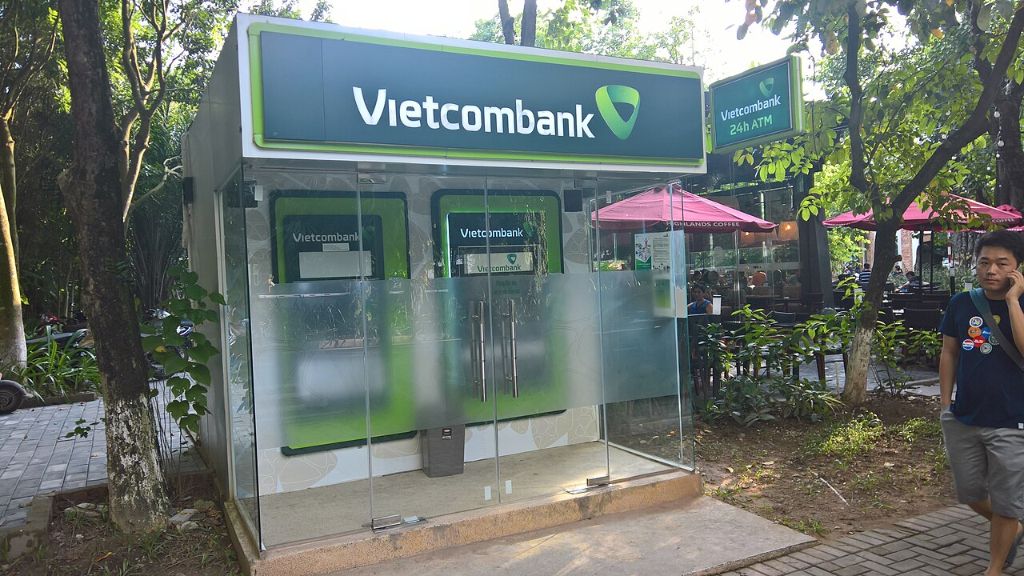
ATM fees in Vietnam run from zero to about 66,000 VND per withdrawal as of November 2026, and most machines cap a single withdrawal at 2–5 million VND. VPBank is the most consistently reported fee-free bank for foreign Visa and Mastercard. Always decline the machine’s currency conversion, and compare ATM Vietnam fees on screen before confirming.
Written by the Mermaid Seaview Vung Tau team. Last updated November 18, 2026. Bank fees, limits and exchange rates change often, so check the screen at the ATM and the official sources at the end before you rely on any number.
Key facts (as of November 2026)
- Fee range: Vietnamese ATMs are reported to charge foreign cards between 0 and 66,000 VND (up to about USD 2.60) per withdrawal, as of November 2026.
- Per-withdrawal cap: Most ATMs in Vietnam dispense 2–5 million VND per transaction, commonly 3 million, and a few allow up to 10 million, as of November 2026.
- No official tariff: No Vietnamese bank publishes an official ATM fee list for foreign cards, so the fee shown on the ATM screen is the one that counts.
- Lowest-fee bank: VPBank is reported free for most Visa and Mastercard cards, with a cap of around 5–10 million VND per withdrawal, as of November 2026.
- Conversion trap: Accepting the ATM’s offer to bill you in your home currency typically costs an estimated 5–10% against the interbank rate; choose VND every time.
- Exchange rate: 1,000,000 VND is roughly USD 39 at the State Bank of Vietnam central rate of 25,600 VND per US dollar, as of November 2026.
- Customs: Travelers must declare cash above USD 5,000 (or equivalent) or 15 million VND when entering or leaving Vietnam, as of November 2026.
What Are the ATM Fees in Vietnam for Foreign Cards?
Vietnamese ATMs charge foreign cards a flat access fee that ranges from nothing to about 66,000 VND per withdrawal, as of November 2026. At the central rate that is at most about USD 2.60 each time. The fee is added on top of the cash you take out and is charged by the bank that owns the machine, not by your own bank.
There is one thing to understand before reading any fee table: no bank in Vietnam publishes an official ATM tariff for foreign cards. Every figure below comes from traveler reports and guide sites updated in November 2026, with some individual user reports dating from mid-2025. The reports conflict, and banks change fees without notice.
So treat the numbers as reported ranges. The machine shows its fee on screen and asks you to accept it before it pays out. That on-screen figure is the binding one. If it is higher than you expected, press cancel, take your card and walk to another bank. Canceling at that stage costs nothing.
| Bank | Reported fee per withdrawal | Reported max per withdrawal | Notes |
|---|---|---|---|
| VPBank | Free for most Visa/Mastercard | About 5–10 million VND | Most consistent low-fee reports |
| TPBank | Mixed: 0, or about 3.3% / roughly 33,000 VND | About 5 million VND | Formerly free; fee reported since mid-2025; some mall LiveBank kiosks still reported at 0 |
| Vietcombank | About 50,000 VND | 2–5 million VND (uncertain) | ATMs at Tan Son Nhat arrivals |
| Agribank | About 22,000–55,000 VND | 3 million VND | Reports differ |
| VietinBank | About 55,000 VND | 3 million VND | Based on a June 2025 user report |
| BIDV | About 55,000 VND | Not confirmed | Based on a June 2025 report |
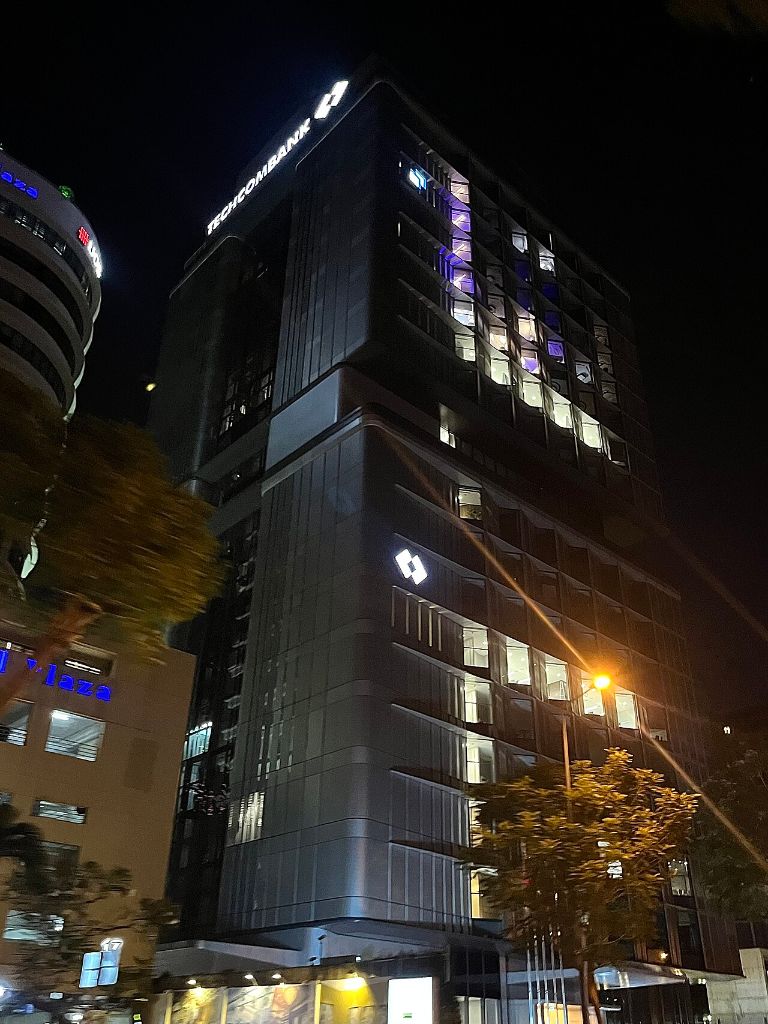
| Techcombank | About 50,000 VND | 5 million VND | ATMs at Tan Son Nhat arrivals |
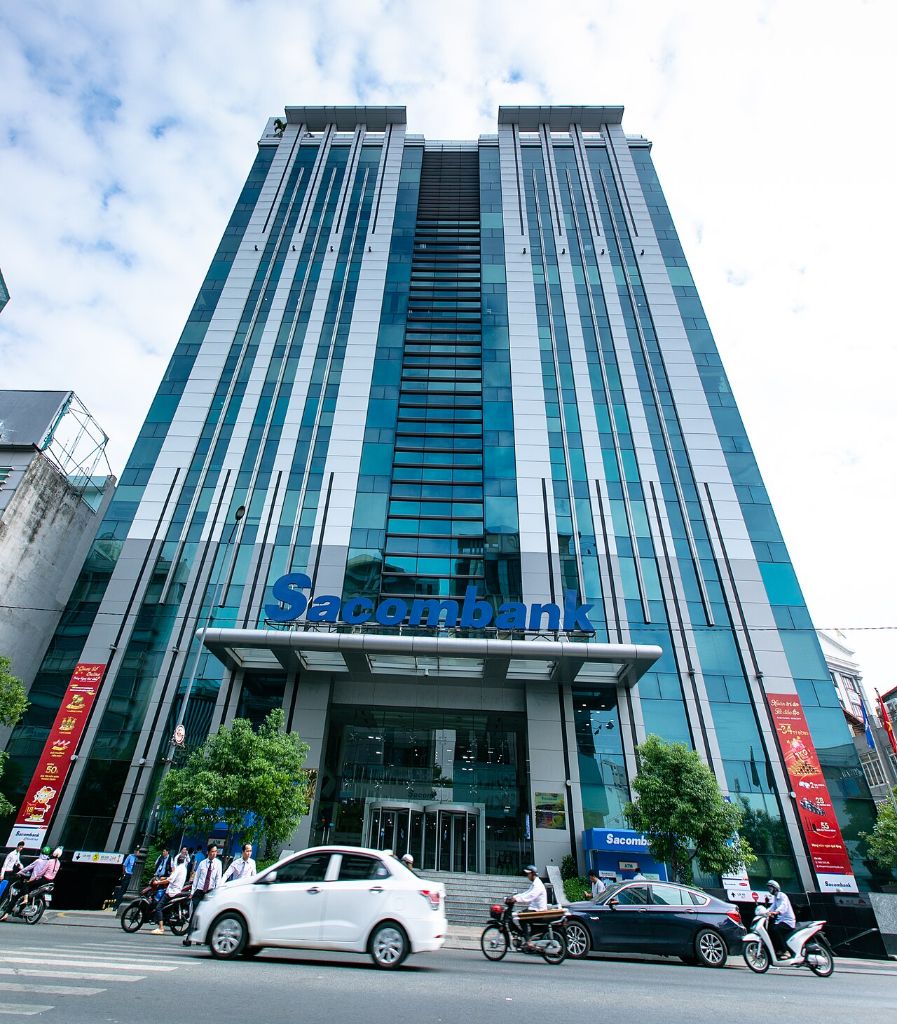
| Sacombank | 50,000–100,000 VND | Up to 10 million VND | High cap, higher reported fee |
| ACB | Free to about 50,000–55,000 VND | 3 million VND | Reports vary widely |
| MB Bank | 49,500–66,000 VND | 5 million VND | Top of the reported range |
| HSBC Vietnam | Unclear | About 4.8 million VND | Check the screen |
| Shinhan | Charges foreign cards; amount not confirmed | Not confirmed | Check the screen |
All figures in the table are reported by travelers and guide sites as of November 2026, not official bank prices.
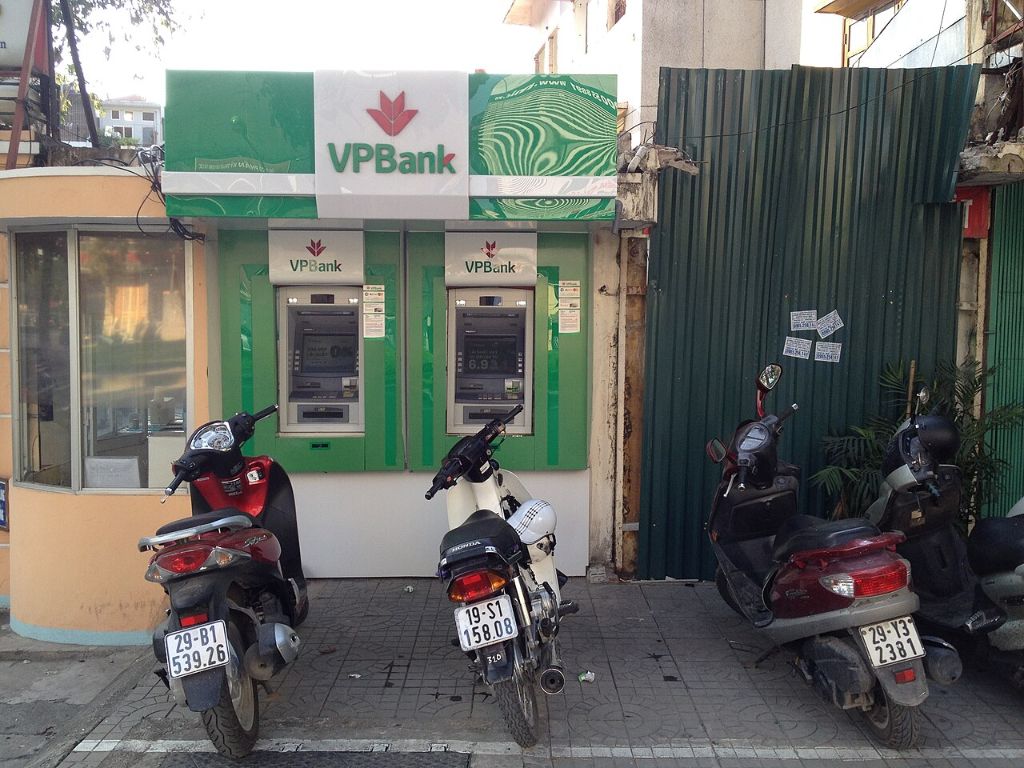
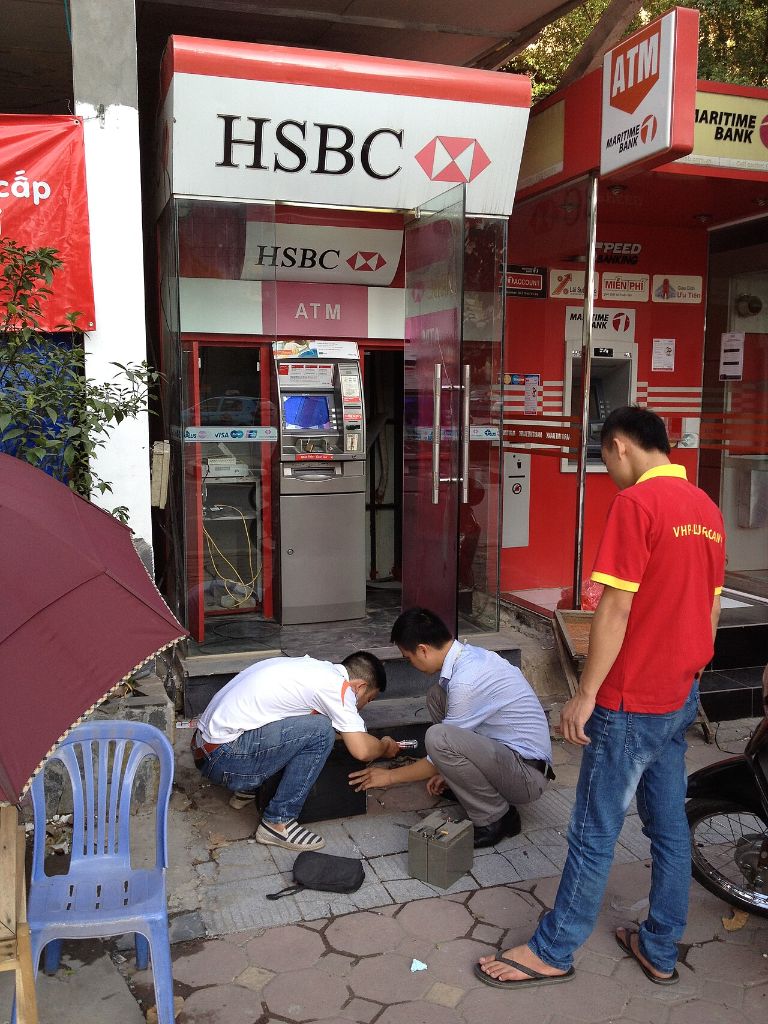
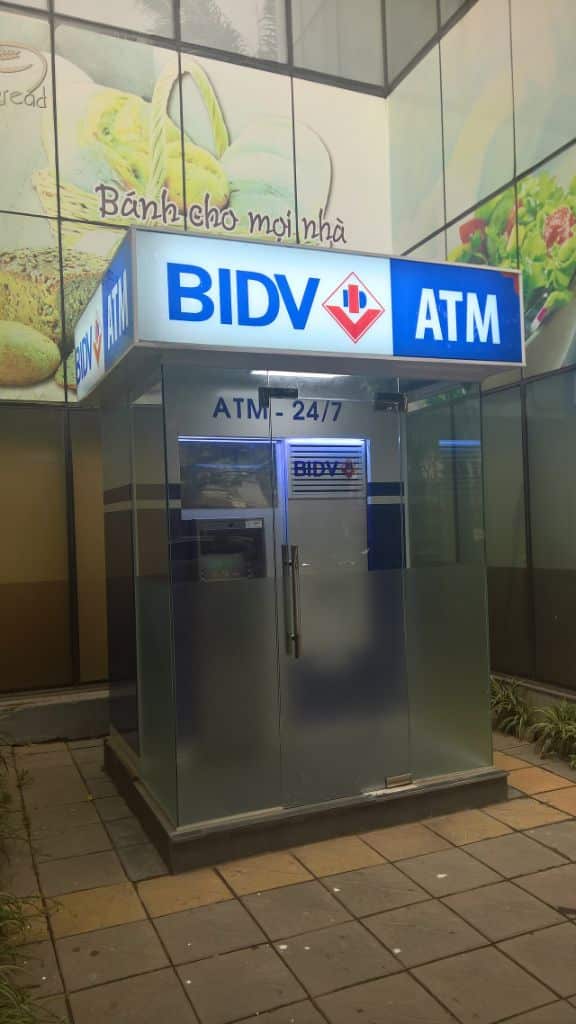
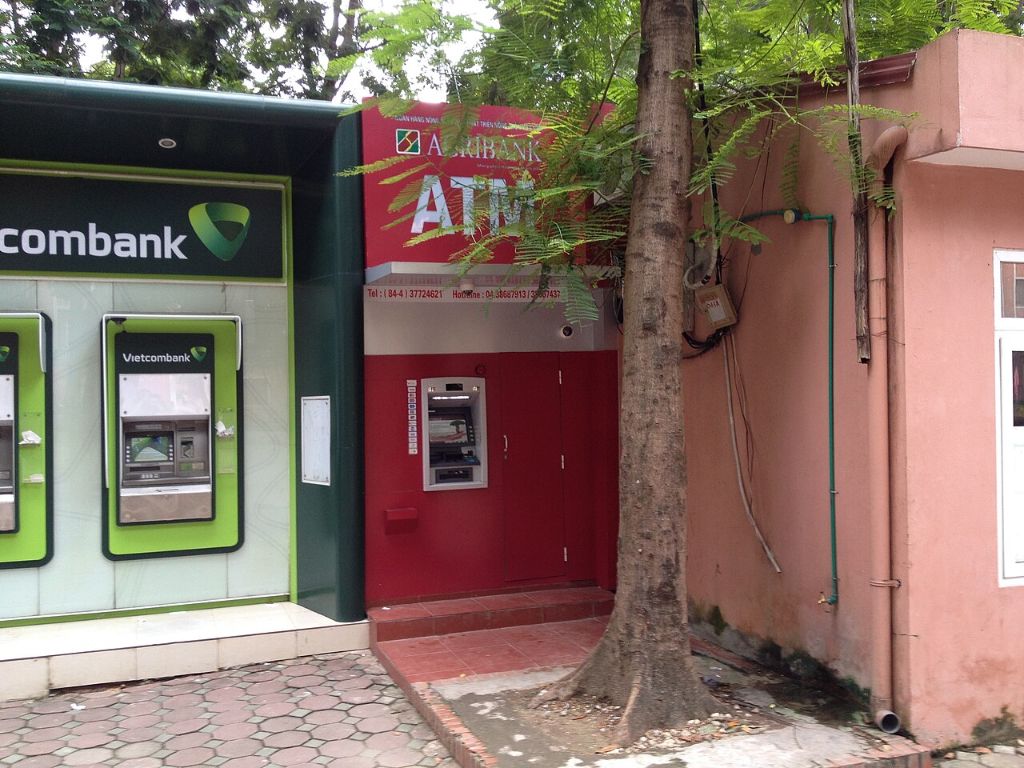
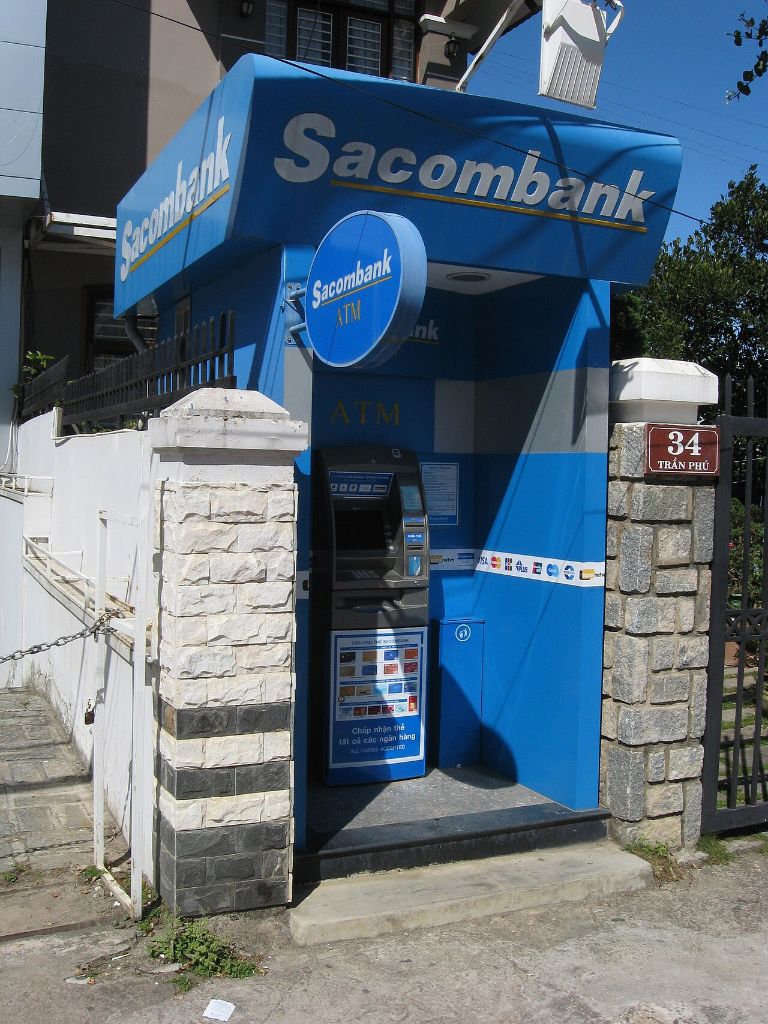
Photos: 1) Phan Minh Tuấn, CC BY-SA 4.0; 2) Phan Minh Tuấn, CC BY-SA 4.0; 3) Donald Trung, CC BY-SA 4.0; 4) Phan Minh Tuấn, CC BY-SA 4.0; 5) Diane Selwyn, CC BY-SA 3.0; via Wikimedia Commons.
Which Banks Have the Lowest Vietnam ATM Fees?
VPBank is the first ATM to look for, because it is the bank most consistently reported to charge nothing on most foreign Visa and Mastercard cards, as of November 2026. Its reported cap of around 5–10 million VND per withdrawal is also among the highest, so one visit can cover several days.
TPBank used to be the other free option. Since mid-2025 travelers have reported a fee of about 3.3%, or roughly 33,000 VND, at its machines, while some LiveBank kiosks inside malls are still reported at zero, as of November 2026. With mixed reports like these, the only safe approach is to insert your card, read the fee screen and decide then.
ACB sits in the same uncertain group, with reports running from free to about 50,000–55,000 VND as of November 2026. The large state-linked banks, Vietcombank, VietinBank, BIDV and Agribank, are the easiest to find and are mostly reported at around 50,000–55,000 VND, with Agribank sometimes reported as low as 22,000 VND.
Sacombank and MB Bank are reported at the upper end. Sacombank’s higher fee comes with a cap of up to 10 million VND, which can still work out well if you need a large amount in one go.
One bank you will not find is Citibank. Citi sold its Vietnam consumer business to UOB in a deal completed in March 2023, so there are no Citi retail ATMs for travelers.
Local tip: Judge an ATM by the fee as a share of the cash you take. A 50,000 VND fee on 2 million VND is 2.5%. The same fee on 5 million VND is 1%. A free machine with a high cap beats both.
How Much Can You Withdraw From an ATM in Vietnam?
Most ATMs in Vietnam let a foreign card withdraw between 2 and 5 million VND per transaction, with 3 million VND the most common cap and a few banks allowing up to 10 million, as of November 2026. At the November 2026 central rate, 3 million VND is about USD 117 and 5 million VND is about USD 195.
The cap applies to each transaction, not to the day. Vietnamese ATMs generally do not set a daily total for foreign cards. Your daily ceiling is set by the bank that issued your card at home.
That means you can usually make a second or third withdrawal straight after the first. Each one carries the ATM fee again, and possibly a fee from your own bank too. This is why low caps are expensive: three withdrawals of 3 million VND at 55,000 VND each cost 165,000 VND in local fees alone.
Before you fly, check two settings with your card issuer: the daily cash withdrawal limit, and whether the card is enabled for use abroad. Raising the limit from a banking app at home is far easier than sorting it out from a different time zone.
Photos: 1) Vuong Tri Binh, CC BY-SA 4.0; 2) Steffen Schmitz, CC BY-SA 4.0; 3) Xuanphuocle, CC BY-SA 4.0; 4) Dangnamdieu, CC BY-SA 4.0; via Wikimedia Commons.
What Is Dynamic Currency Conversion and How Do You Decline It?
Dynamic currency conversion (DCC) is an offer by the ATM to bill your card in your home currency at the ATM’s own exchange rate, and you should always decline it. The rate behind the offer is typically estimated at 5–10% worse than the interbank rate. On a 5 million VND withdrawal that is a far bigger cost than any access fee.
The offer is designed to look reassuring. The screen shows a fixed amount in dollars, euros or pounds and may describe it as a guaranteed rate. Declining it does not cancel the withdrawal. It only means your own bank or card network does the conversion, which is nearly always cheaper.
- Insert your card, choose English and enter your PIN.
- Select withdrawal and the amount in VND.
- Read the access fee screen. Accept it only if the fee matches what you expected.
- When a screen shows an amount in your home currency, choose the option worded as “VND”, “Decline conversion” or “Without conversion”.
- Wait for both your card and your cash before you leave the machine.
The same rule applies at card terminals in hotels and shops. If the cashier or the terminal asks which currency to charge, the answer is VND.
Local tip: The conversion screen often puts the expensive choice on the button that looks like “Accept” or “Continue”. Slow down on that one screen and read both options before you press anything.
Card, Cash or QR: How Do People Pay in Vietnam?
Visitors to Vietnam need both a card and cash: cards work at hotels, chain stores, supermarkets and mid-range or upscale restaurants, while street food, markets and family shops take cash. Contactless payment is standard at chains, and Apple Pay or Google Pay loaded with a foreign Visa or Mastercard works at contactless terminals, as of October 2026.
Card payments can carry a merchant surcharge. Surcharges of 2–3%, sometimes 4%, are common in Vietnam as of October 2026, so ask before you tap if the bill is large.
Locals mostly pay by scanning a QR code from a banking app, and ATM use is falling as a result. State Bank of Vietnam data for the end of February 2026 counted 20,772 ATMs nationwide, down 2.7%, against 761,793 card terminals.
For foreign visitors, QR is opening up in stages. The national switch, Napas, links Vietnam’s QR system with China (UnionPay, Alipay and Weixin Pay), Thailand, Laos, Cambodia, South Korea and Singapore. Mastercard’s “Pay Local” feature, reported in August 2026, lets visitors scan domestic QR codes with a Mastercard. The Wise app can scan QR codes where Alipay+ is accepted, for residents of some countries.
Coverage is still thin. Only about 154,000 of more than 2 million e-payment merchants accepted cross-border QR as of September 2026. Western visitors in particular should plan on cash and cards. For ride-hailing and other apps worth installing before you land, see our guide to the best apps for traveling in Vietnam.
Photos: 1) Bahnfrend, CC BY-SA 4.0; 2) Bahnfrend, CC BY-SA 4.0; 3) RG72, CC BY-SA 4.0; 4) Jean-Marie Hullot, CC BY 3.0; 5) Thomas Schoch, CC BY-SA 2.5; via Wikimedia Commons.
What Will Your Home Bank Charge on Top of Vietnam ATM Fees?
Your home bank usually adds a foreign transaction fee of roughly 1.5–3% to every overseas withdrawal, on top of whatever the Vietnamese ATM charges. Typical figures as of October 2026 are about 3% for US cards, 2.75–2.99% plus a per-transaction fee for UK cards, 1.5–3% in the Eurozone and about 3% in Australia.
A standard card can therefore cost three fees at once: the local ATM fee, a percentage from your bank and sometimes a flat cash fee. Check your own account terms, because the range between banks is wide.
Travel-focused cards cut the home-bank part. Wise, Revolut, Monzo and Starling charge no or low currency conversion fees and include a monthly fee-free ATM allowance, roughly 200 units of your home currency on basic plans as of October 2026. The allowance varies by plan and country, so read your own plan before you travel. In the US, the Charles Schwab debit card is widely cited as refunding ATM fees.
None of these cards removes the Vietnamese bank’s access fee at the machine, although Schwab is reported to refund it afterwards. None of them protects you from DCC either. That choice is still made on the ATM screen.
How Do You Tell Vietnamese Dong Notes Apart?
Vietnamese dong comes in notes from 1,000 to 500,000 VND, and the safest way to tell them apart is to read the printed number, not the color. Coins are not in practical use. The three smallest notes are paper, and everything from 10,000 VND up is polymer.
| Note | Material | Approx. value in USD | Watch for |
|---|---|---|---|
| 1,000 VND | Paper (cotton) | 0.04 | Small change only |
| 2,000 VND | Paper (cotton) | 0.08 | Small change only |
| 5,000 VND | Paper (cotton) | 0.20 | Small change only |
| 10,000 VND | Polymer | 0.39 | Confused with 100,000 |
| 20,000 VND | Polymer | 0.78 | Blue-toned; confused with 500,000 |
| 50,000 VND | Polymer | 1.95 | Handy for taxis and street food |
| 100,000 VND | Polymer | 3.91 | Confused with 10,000 |
| 200,000 VND | Polymer | 7.81 | Common from ATMs |
| 500,000 VND | Polymer | 19.53 | Blue-toned; confused with 20,000 |
USD values use the State Bank of Vietnam central rate of 25,600 VND per US dollar as of November 2026. On the same day Vietcombank quoted 25,340 to buy and 25,720 to sell.
Two pairs cause most mistakes. The 10,000 and 100,000 notes differ by a single zero, and the 20,000 and 500,000 notes are both blue-toned. Handing over a 500,000 note in place of a 20,000 note is a loss of about USD 19 as of November 2026. Keep large notes in a separate pocket or wallet section, and count the zeros when you pay at night.
Where Can You Find ATMs in Ho Chi Minh City?
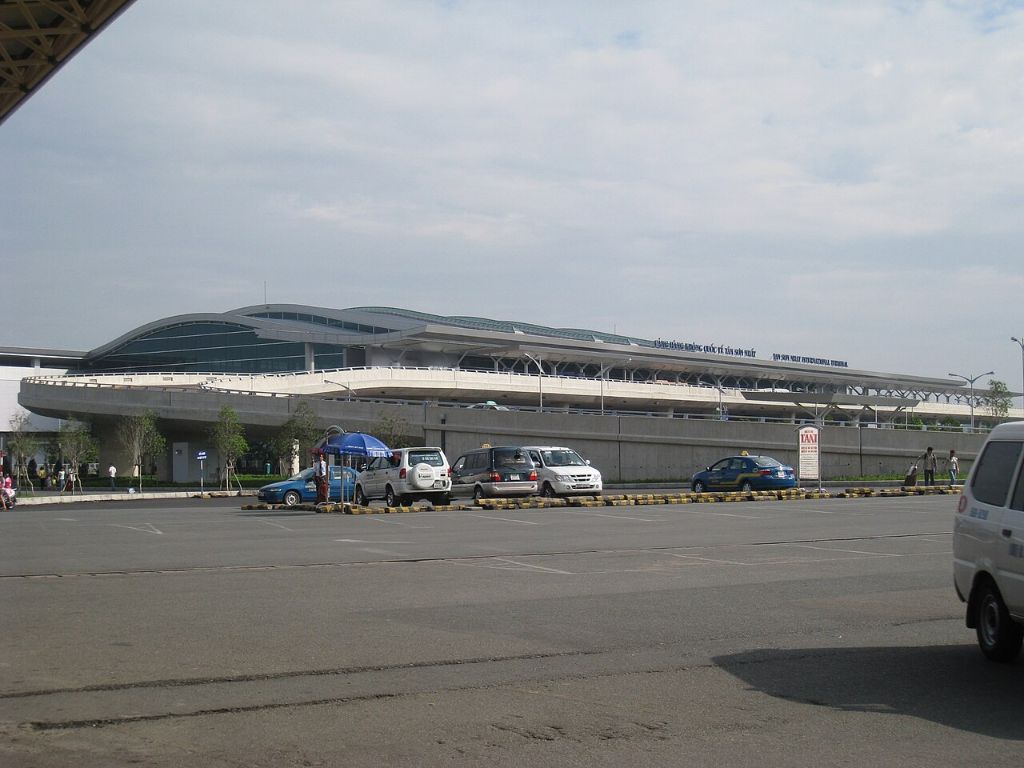
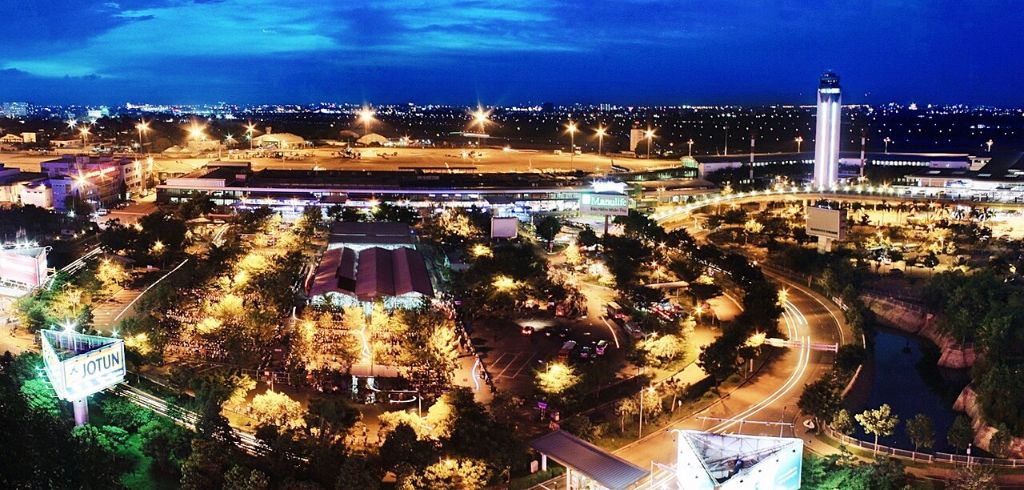
In Ho Chi Minh City (Saigon), the easiest places to find ATMs that take foreign cards are the international arrivals hall at Tan Son Nhat Airport (Sân bay Tân Sơn Nhất) and the streets of District 1. Most visitors make their first withdrawal at the airport and top up in the center.
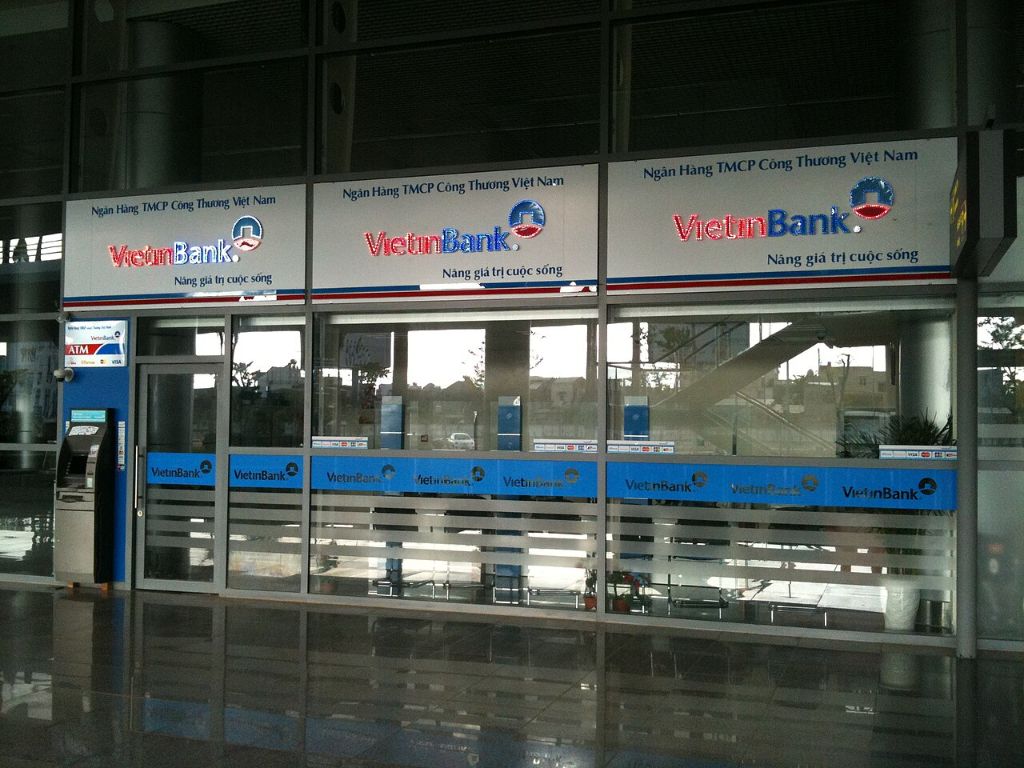
At Tan Son Nhat Terminal 2, Vietcombank, BIDV and Techcombank ATMs stand just past customs in international arrivals, next to the currency exchange and SIM card desks, as of August 2026. All three banks are reported at about 50,000–55,000 VND per withdrawal as of November 2026. A sensible plan is to take out enough for the ride into town and the first day, then look for a lower-fee machine later.
Photos: 1) Genghiskhanviet, public domain; 2) Laurdhz, CC BY-SA 4.0; 3) Dragfyre, CC BY-SA 3.0; via Wikimedia Commons.
Check your ticket as well. Long Thanh International Airport is planned to open in December 2026, with flights moving over in stages through 2027. Your booking will show SGN for Tan Son Nhat or LTH for Long Thanh.
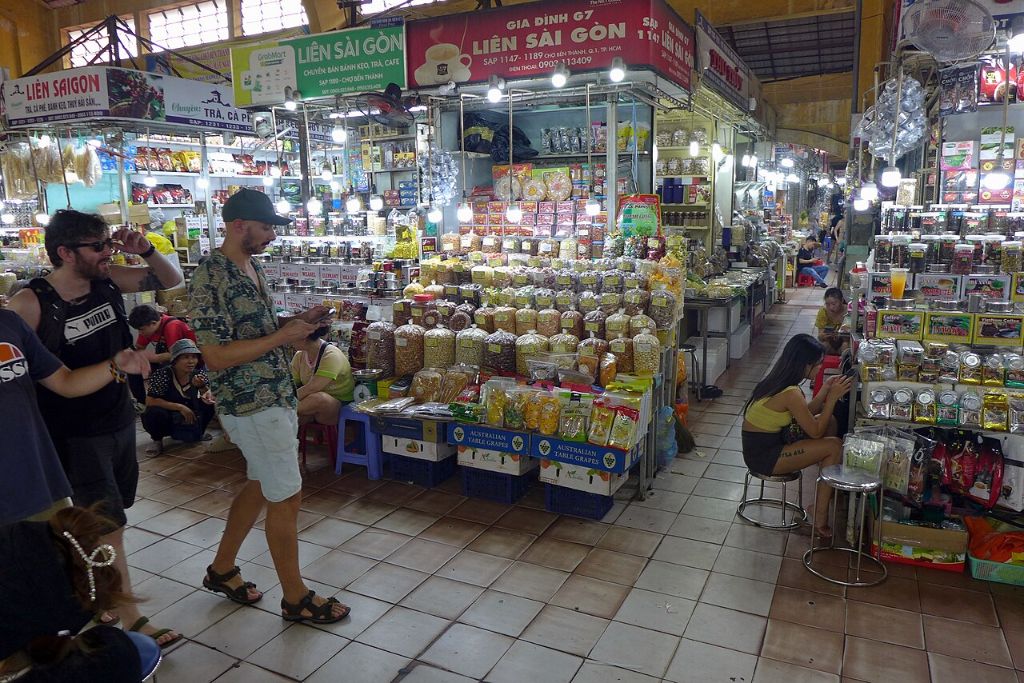
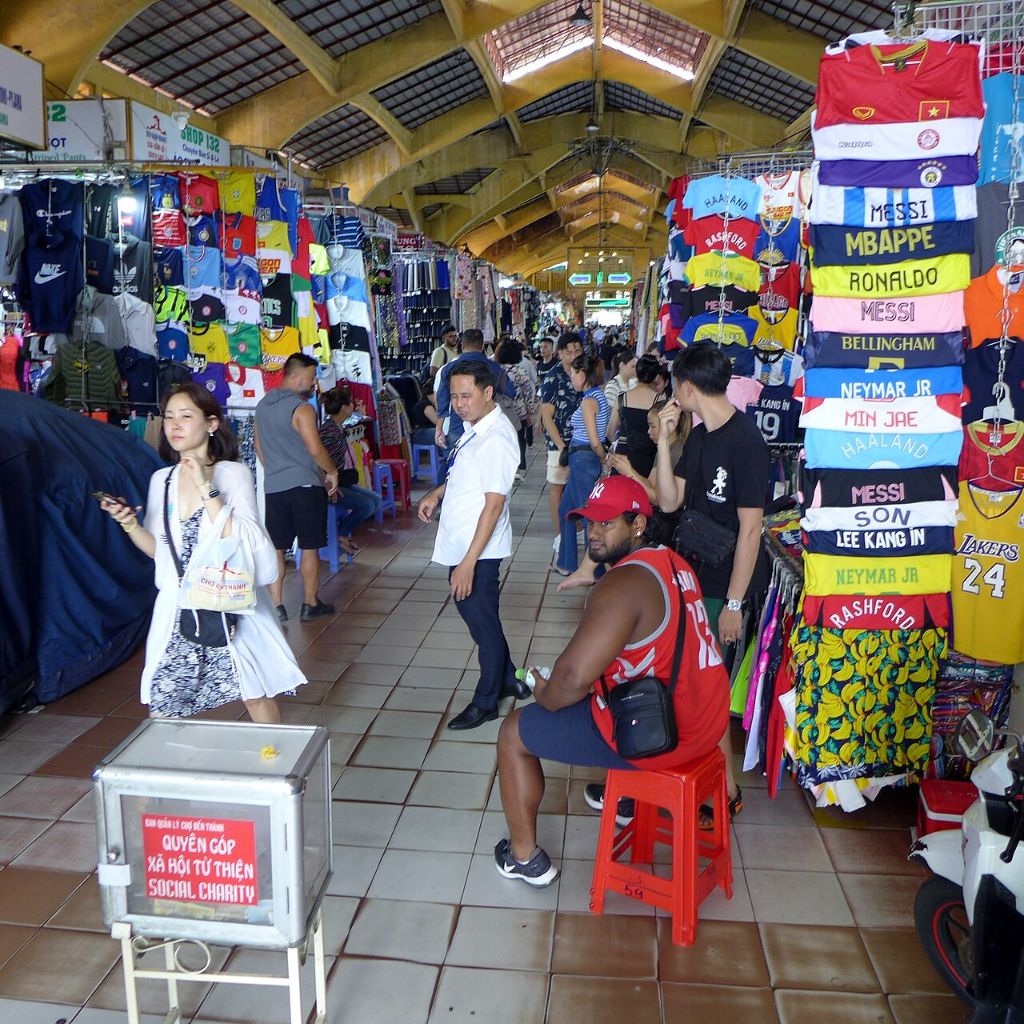
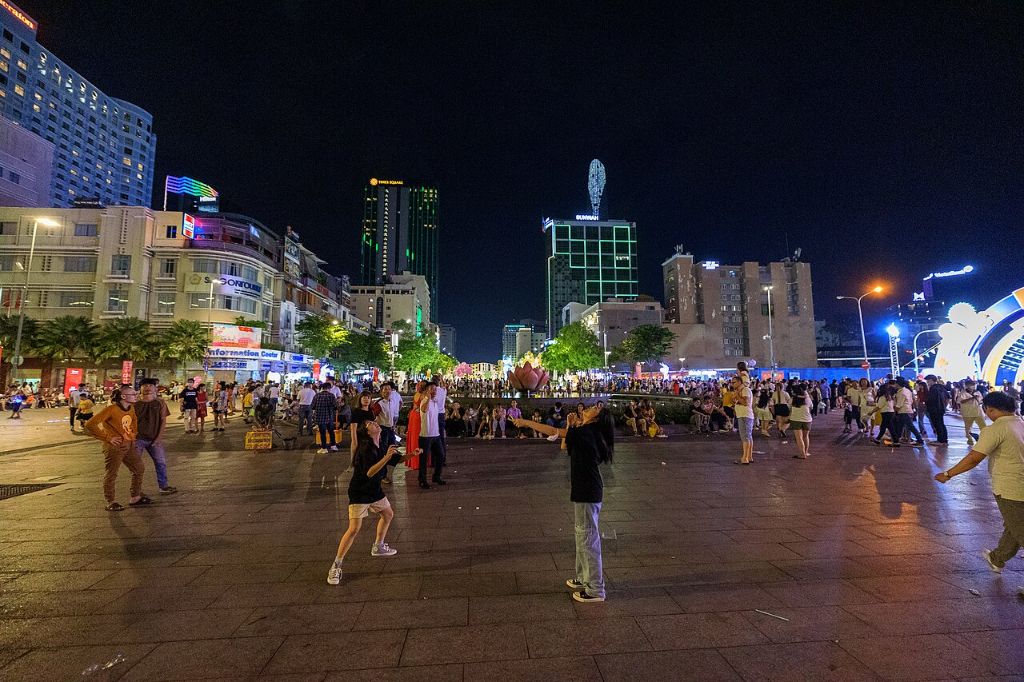
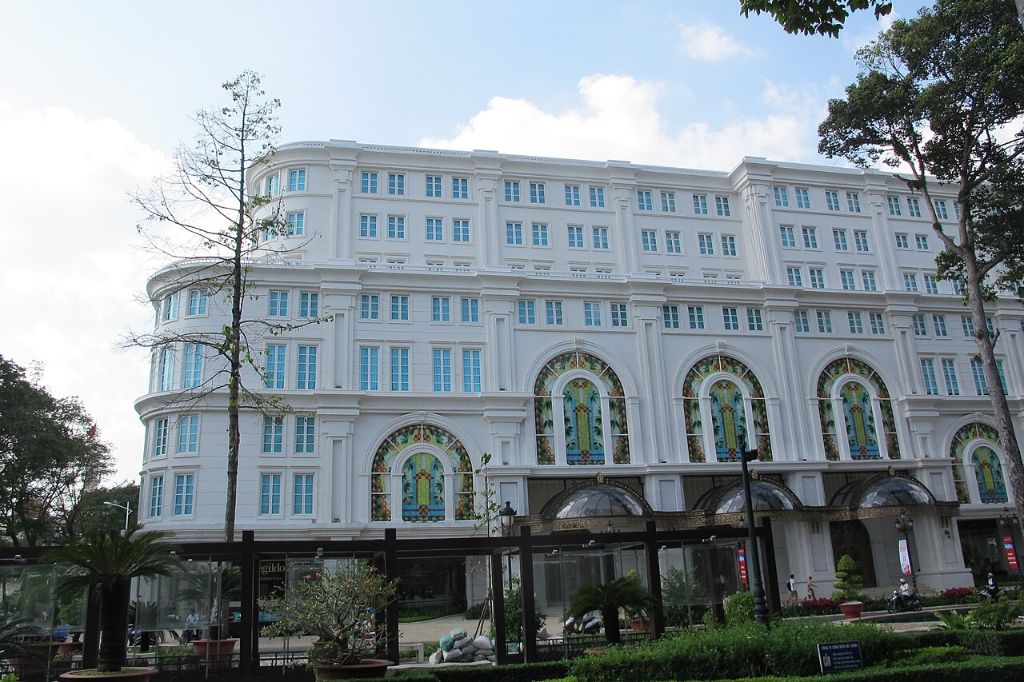
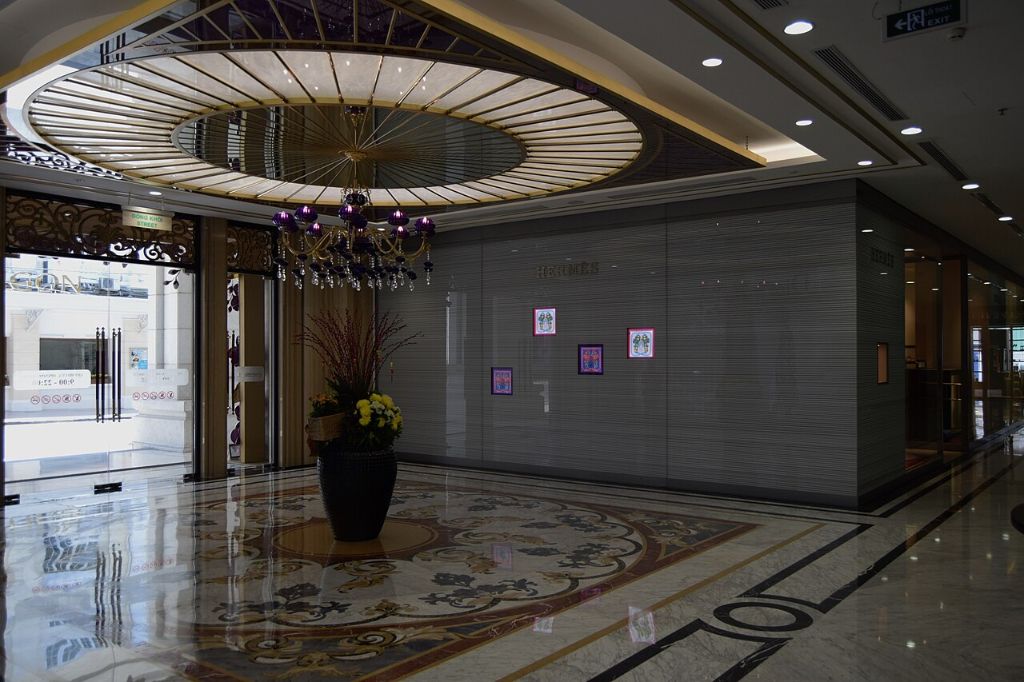
In the center, District 1 is dense with bank branches and mall ATMs. The area around Ben Thanh Market (Chợ Bến Thành), Le Loi (Lê Lợi), Dong Khoi (Đồng Khởi) and Nguyen Hue (Nguyễn Huệ) has several banks within a short walk of each other, which makes it practical to compare on-screen fees. Machines inside branches and malls are also the safer choice, as covered in the safety section below.
Because fee-free machines are less common than the big state-linked banks, it pays to look up the nearest VPBank ATM on your map app before you set out. If you are planning the Saigon part of your trip, this Ho Chi Minh City travel guide covers the districts, transport and sights around those central streets.
Local tip: Withdraw during bank opening hours at a machine attached to a branch when you can. If the ATM keeps your card or pays out the wrong amount, staff are a few steps away.
Photos: 1) Kevin Rutherford, CC BY-SA 2.0; 2) trungydang, CC BY 3.0; 3) Anne and David, public domain; via Wikimedia Commons.
Where Can You Exchange Cash Legally in Vietnam?
You can exchange foreign cash legally in Vietnam only at banks and at licensed exchange agents that display a certificate marked “đại lý đổi ngoại tệ”. Anywhere else is an unlicensed outlet, however convenient or well known it is.
The penalties were tightened by Decree 340/2025, in force since February 9, 2026. Exchanging at an unlicensed outlet brings a warning for amounts under USD 1,000 and a fine of 10–20 million VND for amounts from USD 1,000 to 10,000, as of November 2026. The money can also be confiscated.
Gold shops around Ben Thanh Market are popular with travelers for exchanging dollars. Some are licensed agents and some are not. Look for the certificate on the wall before you hand over any notes, and ask for a receipt.
Airport exchange counters are legal and convenient, though their rates are reported at roughly 1–5% worse than city rates as of November 2026. Changing a small amount on arrival and the rest in town limits the cost.
Customs rules are separate. You must declare cash above USD 5,000 (or the equivalent in another currency) or above 15 million VND when you enter or leave Vietnam. These are declaration thresholds, not limits on what you may carry. Undeclared cash brings fines of 1–20 million VND under Decree 169/2026, in force since July 1, 2026. Our guide to what to expect at Vietnam customs walks through the arrival process.
Heading to the coast after Saigon? Mermaid Seaview offers sea-view apartments a short walk from Back Beach (Bãi Sau) in Vung Tau, about two hours by road from the city. Message the team to check dates and ask anything about getting here.
How Much Cash Do You Need Per Day in Vietnam?
A typical guide figure is 1–1.5 million VND in cash per person per day, as of October 2026, which is about USD 39–59. Total mid-range spending, including what goes on a card, usually falls between 1.2 and 2.5 million VND a day.
| Item | Typical price (as of October 2026) | Usually paid by |
|---|---|---|
| Banh mi (bánh mì) | 25,000–40,000 VND | Cash |
| Pho or hu tieu (phở, hủ tiếu) | 40,000–70,000 VND | Cash |
| Iced coffee | 20,000–35,000 VND | Cash |
| Grab bike in the center | 15,000–40,000 VND | Cash or app |
| Grab car in the center | 60,000–120,000 VND | Cash or app |
| GrabCar, airport to District 1 | 150,000–250,000 VND | Cash or app |
Small notes matter more than the total. A street vendor selling a 30,000 VND banh mi may not have change for a 500,000 note, so break large notes at supermarkets and convenience stores. Tipping is generally not expected in everyday situations, so there is no need to carry extra for it.
Cash in Vung Tau, Beach Towns and Over Tet
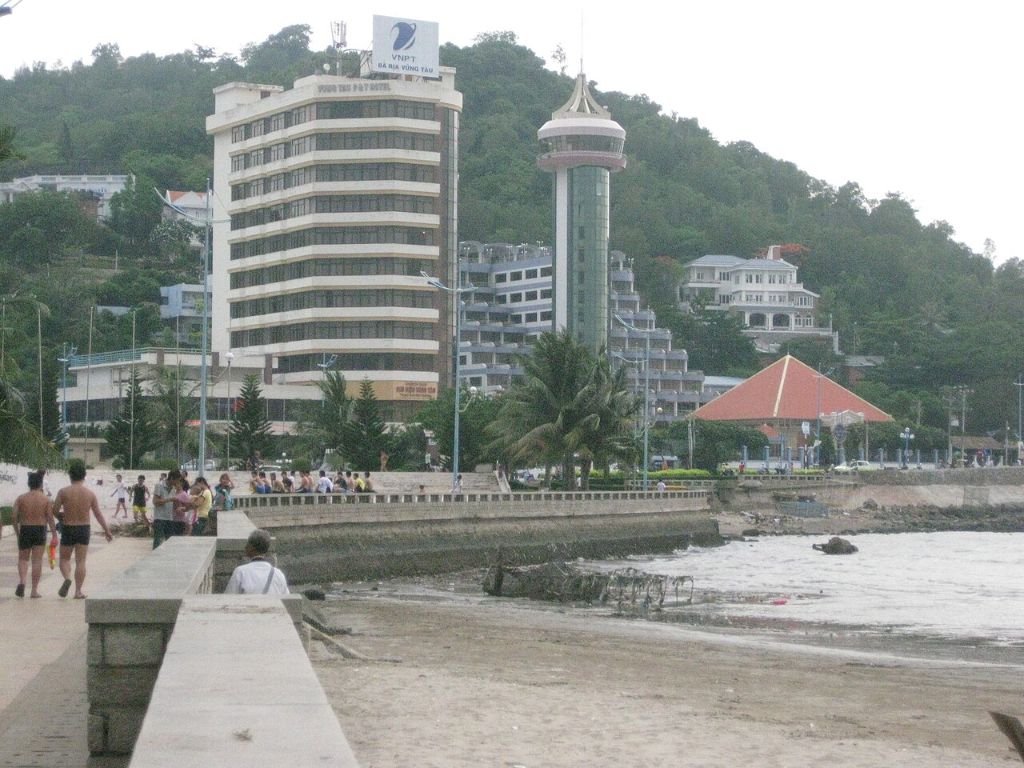
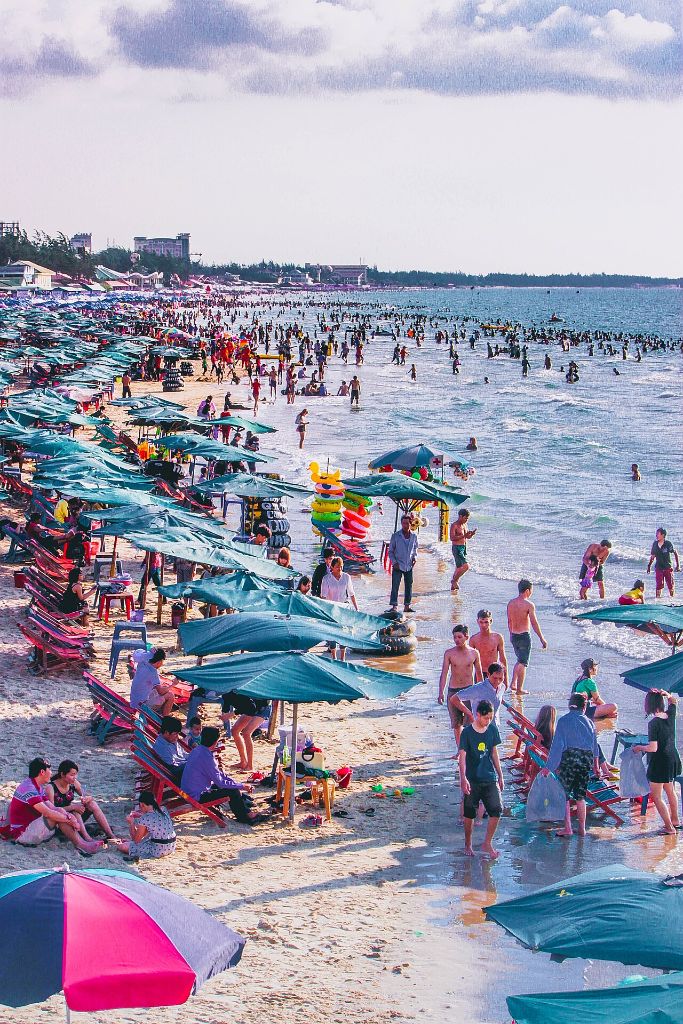
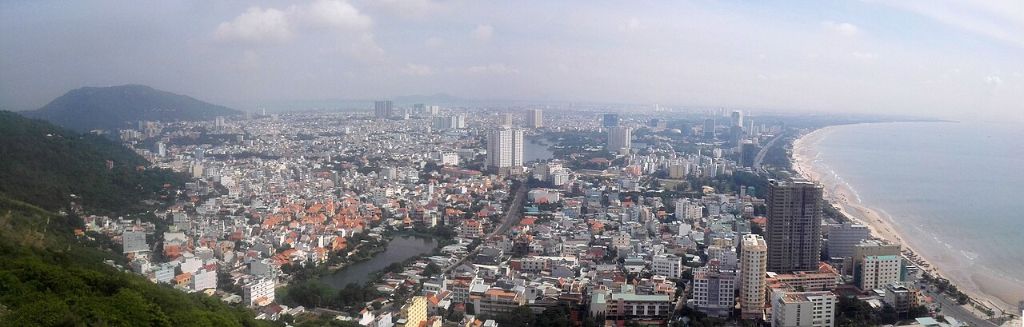
The simplest plan for Vung Tau and other beach towns is to withdraw the cash you need in Saigon before you travel. Smaller towns have fewer ATMs that suit foreign cards, so you have less room to shop around for a low fee or a high cap.
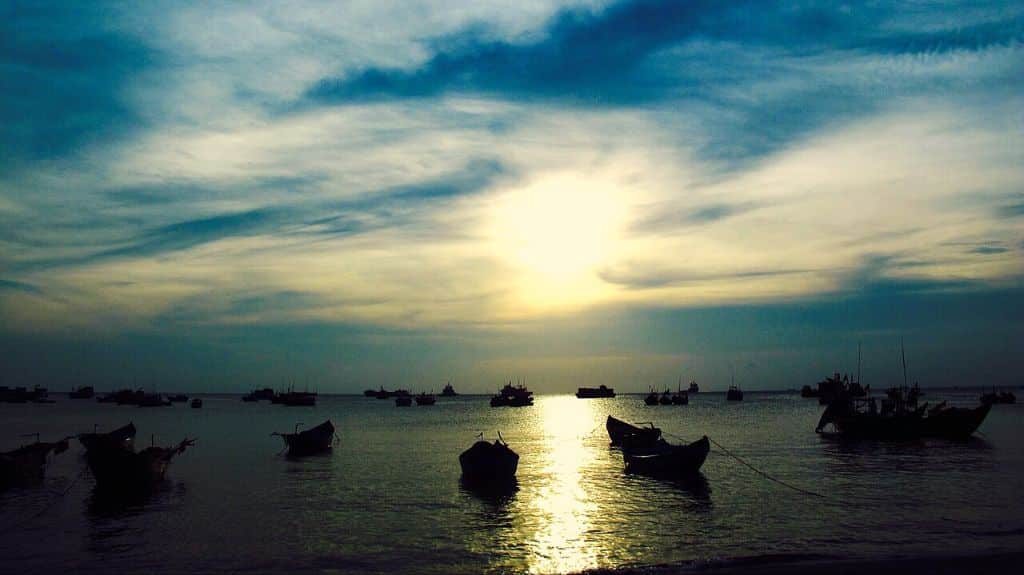
Photos: 1) Hữu Sơn, public domain; 2) Nh.Nguyen, CC BY-SA 4.0; 3) Pieceofmetalwork, CC BY-SA 4.0; 4) trungydang, CC BY 3.0; via Wikimedia Commons.
Since July 1, 2025, Ho Chi Minh City also includes the former Ba Ria–Vung Tau province, so Vung Tau is now administratively part of the city, although it is still about two hours by road from central Saigon.
Beach spending leans toward cash: seafood stalls, beach chairs, small cafés and family shops. A card remains useful for accommodation, supermarkets and larger restaurants. If you run short during your stay at Mermaid Seaview, we can point you to nearby bank ATMs.
Holidays need extra planning everywhere in Vietnam. Over Tet (Tết), the Lunar New Year, banks close for several days and ATMs empty quickly. The next Lunar New Year’s Day is February 6, 2027. April 30, May 1 and September 2 are also busy public holidays, and beach towns fill up on all of them. Withdraw a few days ahead and carry enough to cover the whole break.
ATM Safety: What If the Machine Keeps Your Card?
The most common ATM problem for travelers in Vietnam is leaving the card behind, because many machines dispense the cash before they return the card. Take the cash, then stay at the machine until the card comes out.
If you walk away, the ATM typically pulls the card back in after a short wait. Getting it back means dealing with the bank that operates the machine, which is much easier when the ATM is attached to an open branch. Freeze the card in your banking app in the meantime, and carry a second card from a different account, kept in a separate place.
A few habits cover the rest:
- Prefer ATMs inside bank branches, malls and hotel lobbies over stand-alone street booths.
- Look at the card slot and keypad before you insert your card. If anything is loose or looks added on, use another machine.
- Cover the keypad with your hand when you enter your PIN.
- Put the cash away before you step outside, and count it against the receipt.
Bank ATMs in Vietnam are linked through Napas, the national payment switch. For a foreign card, the Visa or Mastercard logo on the machine is what tells you it should accept your card.
Useful Vietnamese
- Rút tiền – withdraw cash
- Cây ATM ở đâu? – Where is the ATM?
- Phí – fee
- Không chuyển đổi – no conversion
- Tiền mặt – cash
- Quẹt thẻ được không? – Can I pay by card?
Plan a few days by the sea in Vung Tau. Mermaid Seaview’s sea-view apartments are a short walk from Back Beach (Bãi Sau), an easy add-on to a Saigon trip. Send a message for availability and directions.
Frequently Asked Questions
How much do ATMs in Vietnam charge foreign cards?
ATMs in Vietnam are reported to charge foreign cards between 0 and 66,000 VND per withdrawal, as of November 2026, which is up to about USD 2.60. No bank publishes an official tariff for foreign cards, so these are traveler-reported figures. The fee shown on the ATM screen before you confirm is the one you will pay.
Which ATM in Vietnam has no fee?
VPBank is the bank most consistently reported to charge no fee on most foreign Visa and Mastercard cards, as of November 2026. TPBank was formerly free, but reports since mid-2025 mention a fee of about 3.3% or roughly 33,000 VND at many machines. ACB reports also vary. Always read the fee screen before accepting.
What is the maximum ATM withdrawal in Vietnam?
The maximum per withdrawal at most Vietnamese ATMs is 2–5 million VND, commonly 3 million, as of November 2026. A few banks, including VPBank and Sacombank, are reported to allow up to 10 million VND in one transaction. At the November 2026 central rate, 5 million VND is about USD 195.
Should I choose VND or my home currency at a Vietnamese ATM?
Choose VND every time. When an ATM offers to bill you in your home currency, it applies its own exchange rate, typically estimated at 5–10% worse than the interbank rate. Select the option worded as “VND”, “Decline conversion” or “Without conversion”. The withdrawal still goes through, and your own bank handles the conversion.
Is there a daily ATM limit for foreign cards in Vietnam?
Vietnamese ATMs generally set no daily total for foreign cards; the daily limit comes from the bank that issued your card. You can usually make repeat withdrawals one after another, but each one carries the local ATM fee again. Check and, if needed, raise your daily cash limit with your home bank before you travel.
Can I use Visa and Mastercard everywhere in Vietnam?
No, Visa and Mastercard are accepted at hotels, chains, supermarkets and mid-range or upscale restaurants, but not at most street food stalls, markets and family shops. Merchant surcharges of 2–3%, sometimes 4%, are common as of October 2026. Carry cash for small purchases and ask about a surcharge before paying a large bill by card.
Is it better to bring cash or use ATMs in Vietnam?
For most visitors a mix works best: use ATMs for the bulk of your dong and bring some foreign cash as a backup. A fee-free ATM with a card that has low foreign fees is hard to beat on cost. If you exchange cash, use only banks or licensed exchange agents that display a certificate.
Are there ATMs at Ho Chi Minh City airport?
Yes, Tan Son Nhat Terminal 2 has Vietcombank, BIDV and Techcombank ATMs in international arrivals, just past customs and next to the exchange and SIM desks, as of August 2026. These banks are reported to charge about 50,000–55,000 VND per withdrawal as of November 2026, so withdraw what you need for the first day.
Is it legal to exchange money at gold shops in Vietnam?
It is legal only if the shop is a licensed exchange agent displaying a certificate marked “đại lý đổi ngoại tệ”. Under Decree 340/2025, in force since February 9, 2026, exchanging at an unlicensed outlet brings a warning under USD 1,000 and fines of 10–20 million VND for USD 1,000–10,000, and the money can be confiscated.
How much cash can I bring into Vietnam?
There is no cap on how much cash you can bring, but you must declare amounts above USD 5,000 (or equivalent) or above 15 million VND when entering or leaving. These are declaration thresholds, not limits. Failing to declare brings fines of 1–20 million VND under Decree 169/2026, in force since July 1, 2026.
Do ATMs work during Tet in Vietnam?
ATMs keep running during Tet, but they empty quickly and banks close for several days, so refills and help are limited. The next Lunar New Year’s Day is February 6, 2027. Withdraw enough cash a few days before the holiday. The same advice applies to the April 30, May 1 and September 2 holidays.
Can tourists pay by QR code in Vietnam?
Some tourists can, depending on where their wallet or card is from. Napas links Vietnam’s QR network with China, Thailand, Laos, Cambodia, South Korea and Singapore, and Mastercard’s “Pay Local” was reported in August 2026. Only about 154,000 of more than 2 million merchants accepted cross-border QR as of September 2026, so keep cash and a card.
Sources
- State Bank of Vietnam: money issuance and banknotes in circulation
- Napas: National Payment Corporation of Vietnam
- Tuoi Tre News: tougher foreign exchange penalties under Decree 340/2025
- Tuoi Tre News: rules for foreigners carrying cash into Vietnam
- Bizhub (Viet Nam News): ATM usage declines as QR and mobile payments rise
- VietnamPlus: reference exchange rate on November 10, 2026
- Tuoi Tre News: cross-border QR payments for foreign tourists
Featured photo: Donald Trung, CC BY-SA 4.0, via Wikimedia Commons.

Bài viết liên quan
Arriving in Vietnam: Immigration, Customs and What to Declare
What arriving in Vietnam customs and immigration involves in 2026: e-visa and 45-day exemptions, the...

Best Apps for Traveling in Vietnam: Maps, Rides, Food and Translation
The best apps for Vietnam travel as of November 2026: Grab, Google Maps, Google Translate,...
Saigon Then the Beach: A First-Timer’s 5-Day Itinerary
A 5-day Saigon and beach itinerary for first-timers: three nights in Ho Chi Minh City,...

Thiết kế TT Genesis: Hệ thống thang máy có đủ cho cư dân không?
Trong thiết kế TT Genesis, hệ thống thang máy là một trong những hạng mục...

Hồ bơi muối khoáng TT Genesis rộng bao nhiêu?
Hồ bơi công nghệ muối khoáng TT Genesis có tổng diện tích mặt nước 728...

Bcons Central Park: Chủ đầu tư, vị trí, giá bán mới nhất
Bcons Central Park là dự án căn hộ cao tầng do Tập đoàn Bcons phát...

Quyết Định 7461/QĐ-UBND – Quy Hoạch 1/500 KDC Mai Bá Hương
Quyết định 7461/QĐ-UBND ngày 20/12/2019 là văn bản phê duyệt quy hoạch chi tiết xây...

Dragon Eden Có Bao Nhiêu Sản Phẩm? Cơ Cấu sản phẩm
Dragon Eden có tổng cộng 5.467 lô đất ở và 4 block nhà ở xã...


